12. History Lessons
We’ve been very curious about the history of Borgo Santolina but had little information. This summer, our team did some research to document what’s happened over the centuries. Here is what they learned…
For more than 800 years the Borgo has endured as empires rose and fell, battles raged, and families worked the earth. Tucked between the Merse and Farma rivers in southern Tuscany, the valley surrounding Santolina has always been a place of both natural abundance and quiet resilience.
Long before written records, around the 7th century BC, our valley was home to the Etruscans who settled much of what is now Tuscany. Their civilization thrived, building roads, crafting tools, and trading across the Mediterranean. They understood the land and used it to create iron using the forests full of oak and the rivers that never ran dry.
Though the Romans conquered the Etruscans and tried to erase their legacy, their presence still lingers. You can walk their stone walled paths through the forests of our farm down to the river and up the ridge to the historic village of Iesa.
After the Roman Empire collapsed in the 5th century, power in Italy shifted from centralized Roman control to local rulers and invading tribes. The Lombards, a Germanic tribe, invaded Italy in 568 AD and established a kingdom, especially strong in northern and central Italy.
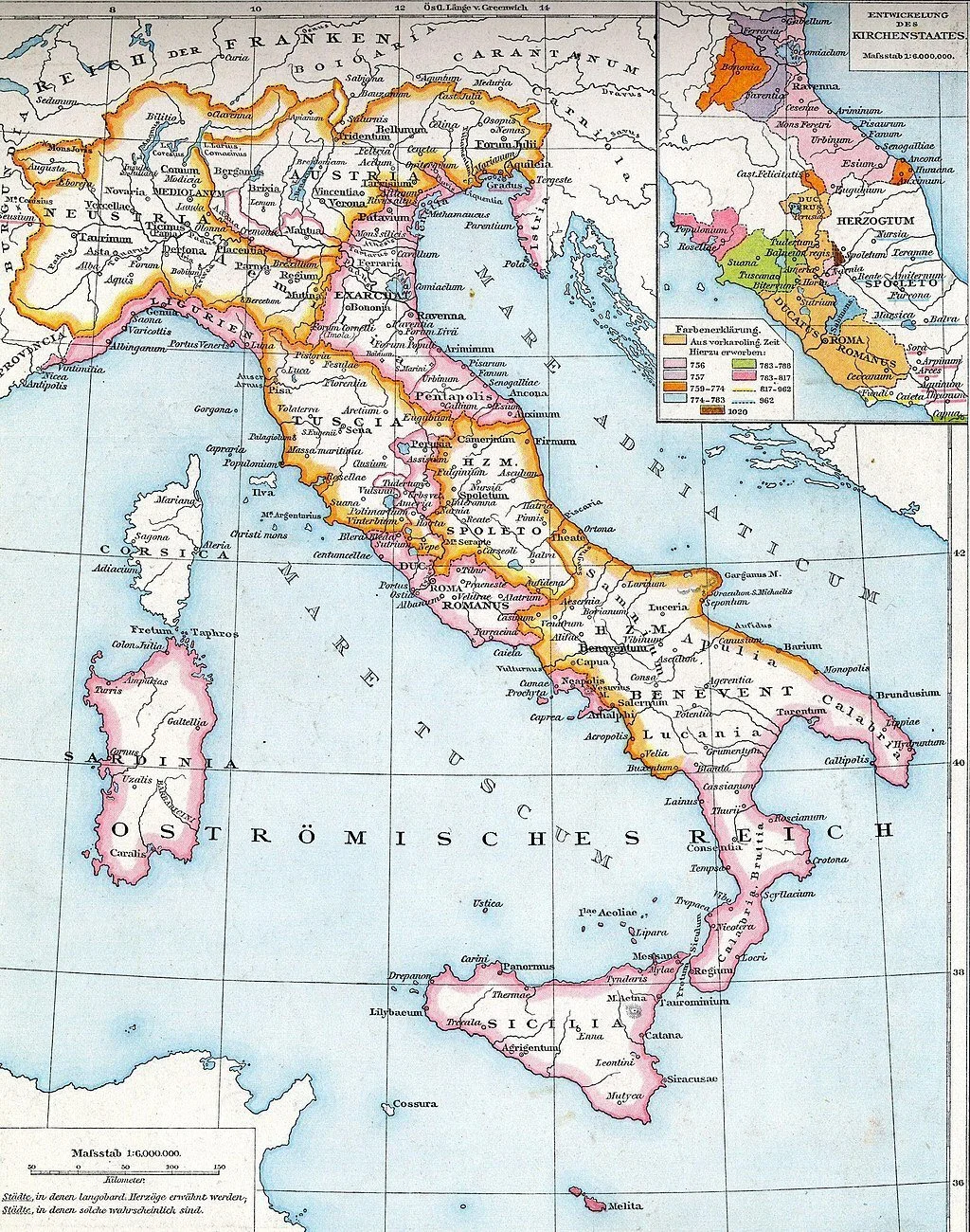
One Lombard family, the Ardengheschi, received large land grants in southern Tuscany and became one of the most powerful and influential noble families during the early Middle Ages. They built nearby Castello di Tocchi in 1100 to watch over the "white road", an ancient route passing through the Val di Merse that connected Siena to the sea and beyond. You can still visit the castle which is next door and now home to about 20 residents and walk the ancient road.
Near the castle, mills sprang up along the riverbanks, powered by the local rivers. Charcoal burners built earth-covered mounds deep in the woods, tending slow fires for days to create fuel for iron forges. The valley became known as Ferraia, meaning “ironworks,” a name that spoke to the labor and skill of its people. If you visit, take a hike to visit the ruins of the ancient ironworks at Torniella.
Late in the 11th century, Siena took an interest in Tocchi as it controlled the important route to the coast and its surrounding woods provided charcoal, timber, and iron, critical for Siena’s economy and military. In 1202, Siena attacked Tocchi, took control and appointed its own governor.
Shortly after Siena took control, in 1206, construction was started of the hamlet that would become Santolina. Its builders and first inhabitants were medieval farmers and blacksmiths working under the supervision and taxation of Siena.
Siena eventually granted rule of Tocchi to two families - the Tolomei and Malavolti, keeping it closely connected to the Republic and for over a century, the valley prospered under Siena’s protection.
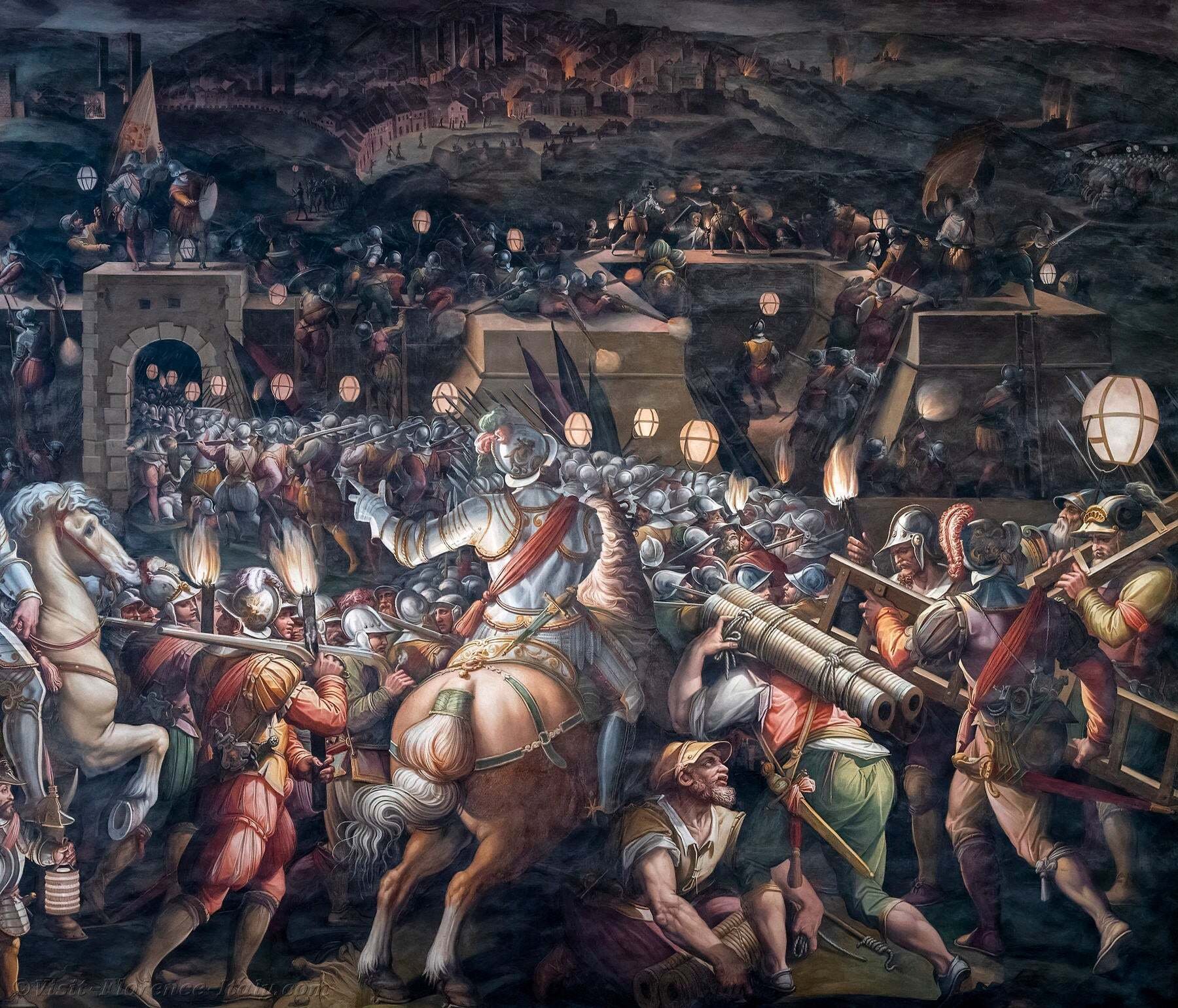
But peace in Tuscany was always uncertain. In 1390, Florence attacked Castello di Tocchi during one of the many Sienese-Florentine wars. In 1391, Siena retook the castle and accused the Malavolti family of betrayal, dismantled the castle’s fortifications, and exiled the ruling family who abandoned the area.
Despite losing its defensive structures, the remains of the castle served as building material for stone houses. Over time, the fortified walls gave way to a small village that remains today.
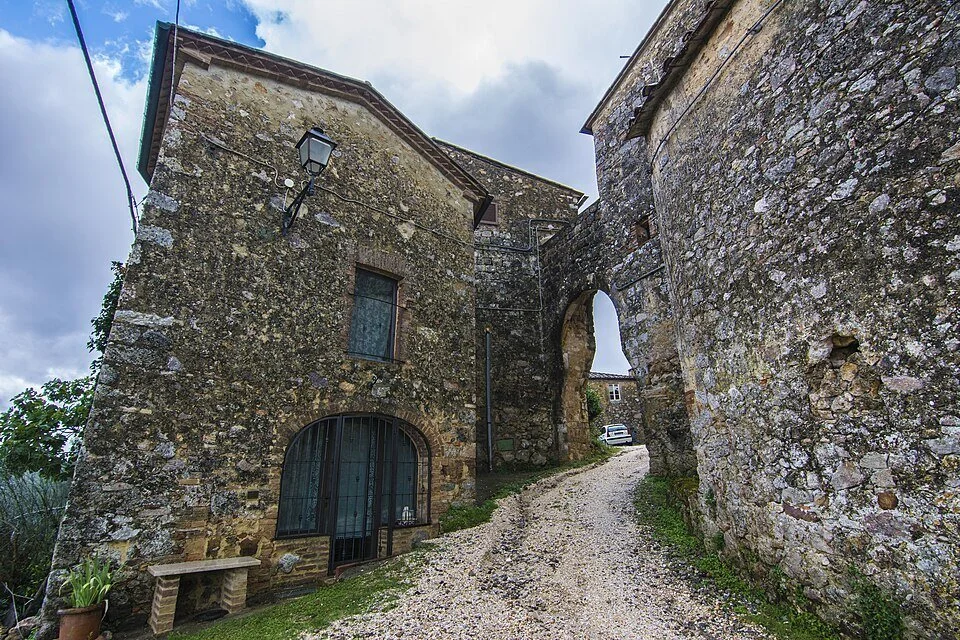
Here you can see a cluster of buildings around a central courtyard, accessed through a well-preserved arched entrance
Next door, Borgo Santolina persevered over the centuries with blacksmiths, farmers and shepherds calling it home. They continued to work the earth and tend their animals, living a quiet life.
By 1821 only two families were left living and working at Santolina: the Rosis and the Borghesis. They built fences, planted vineyards, raised sheep, and added a small chapel. Stone cottages and wooden sheds formed a modest borgo. Even as the world beyond changed, this little corner of Tuscany moved at its own pace.
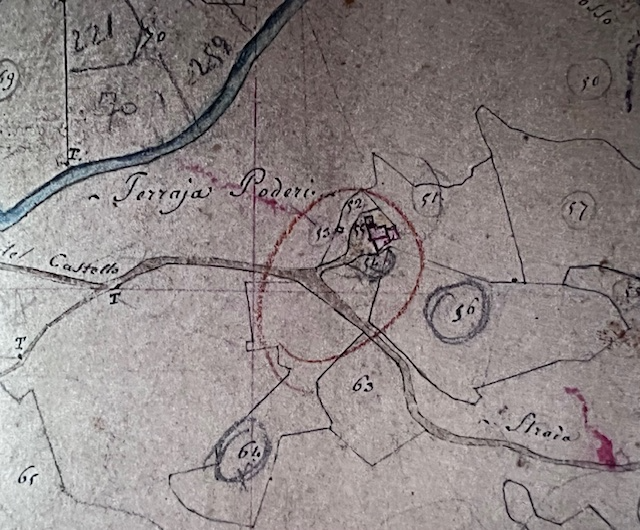
By 1939, Santolina grew to include barns, stables, and animal pens. But the hardships of World War II, followed by postwar migration to cities, led the families to abandon it and by the 1950s, the buildings stood empty. Ivy slowly wrapped around the walls. Roofs gave way to rain and time. The valley fell silent again.
Decades later the Cambrias, a young couple who lived nearby, were riding their horses when they stumbled upon the ruins. Though overgrown and forgotten, they saw its beauty and made it their mission to bring it back to life.
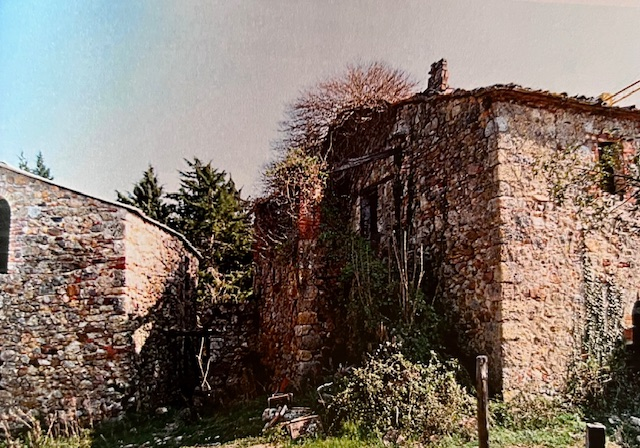
With care and patience, they cleared the land, restored the walls, rebuilt roofs, and added a pool and terrace that blended old stone with new purpose. What was once a hidden forge in the forest became a peaceful estate, one that honored its past while embracing a new future. Their daughter Anna who grew up amongst the renovation continues their legacy today as the manager of the Borgo.
In 2025, we purchased the property and named it Santolina, after the wild herb that grows in our gardens, a plant known for its strength and simplicity. After we finish our renovations, we look forward to welcoming guests from all over the world so they can walk among the ancient roads, swim where vines once climbed, and sleep beneath beams that sheltered blacksmiths, soldiers and farmers alike.
